When drought reduced her half-acre maize field to five bags in 2024, Masozi Takondwa Moyo knew she had to change how she farmed.
The mother of five from Fuzani Nyangulu Village, Traditional Authority (T/A) Mtwalo in Mzimba District, turned to manure and box ridges to improve soil fertility and conserve moisture.
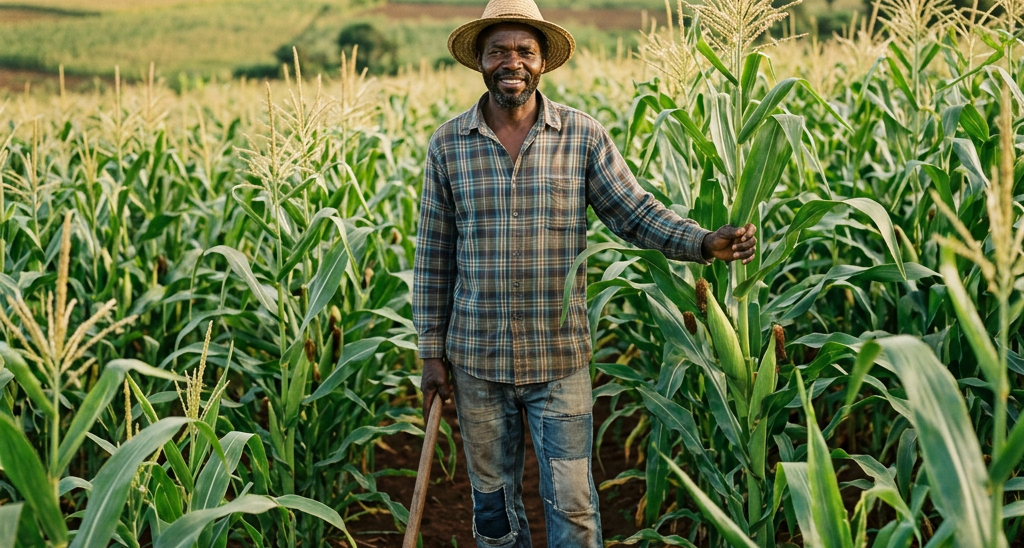
“I also diversified my crops to beat the water stress and improve harvests,” she says.
The change paid off. Moyo harvested 20 bags of maize two bags of beans and three bags of soya beans from the half-acre field.
The harvest helped meet her family’s food requirement and keep her Form Three daughter Lina Nyangulu in school.
As Malawi braces for another drought caused by the strong El Nino weather evolving in the Pacific Ocean, Moyo’s experience is shaping the advice being given to farmers.
At Enyezini in Mzimba North, Mzuzu Agricultural Development Division (Mzadd) land resources conservation officer Chimwemwe Mwambungu urges farmers to conserve water and improve soil moisture ahead of another tricky growing season.
“According to weather forecasts, we anticipate a strong El Niño this year. We are, therefore, promoting technologies that conserve and harvest water for crops to have adequate moisture,” he says.
Mzadd covers Mzimba, Rumphi, Likoma and Nkhata Bay in the Northern Region, which is projected to get higher rainfall than districts in the southern parts of the country.
Still, agricultural authorities are promoting conservation agriculture, pit planting, infiltration trenches, rainwater harvesting and organic manure to help farmers withstand dry spells.
Mzimba North district Agriculture Extension Coordinating Committee chairperson Thomas Ngwira says communities also need to protect the catchments that sustain their farms.
“Conserving the environment around water sources should be the first priority in agricultural production because that is where sustainable food production begins,” he says.
Moyo is among 36 women from five villages who encourage their communities to adopt farming methods that help them harvest more from their small plots amid climate shocks.
They promote soil conservation, growing diverse crops and protecting water sources.
Their efforts have become handy as another drought looms.
The Department of Climate Change and Meteorological Services forecasts show that 12 districts could face severe drought and extreme rainfall during the 2026/27 farming season.
For farmers already dependent on unreliable rainfall, the forecast comes as a test of Malawi’s limited capacity to prepare for another climate shock.
The International Food Policy Research Institute (Ifpri) estimates that financial instruments available for El Nino preparedness and response are worth less than $190 million (about K329 million) through 2028, less than half the $447 million (about K774.4 billion) Malawi sought for its 2024 response.
The concern is not only how much money is available, but also whether it will become accessible.
Some funding may only be released after drought impacts become verifiable, potentially in February or March 2027.
By then, farmers will have planted and some may already be seeing the first signs of crop failure.
“Any financing strategy must adopt a longer-term perspective that accounts for the extended duration of impacts,” reads the July 2026 Ifpri policy note by Jan Duchoslav, Andrew Jamali, Grace Kumchulesi and Joseph Nagoli.
The institute warns that concentrating resources on the initial shock could leave too little for the worst phase of the crisis, which could extend into early 2028.
Malawi has experienced delayed disaster financing before.
On April 30 2024, former president Lazarus Chakwera appealled for $447 million (about K774.4 billion) for the El Niño response. By May, only about a fifth had been pledged.
In March las year, the Department of Disaster Management Affairs disclosed that government had yet to raise the full amount required.
The financing challenge has deepened as donor budgets decline, squashing Malawi’s fiscal space.
In the 2026/27 national budget, Parliament allocated K590 million to disaster risk management.
However, Ifpri warns that most of the money is earmarked for travel, asset maintenance and office operations, leaving K114 million for interventions.
The think tank says Malawi needs to move from responding after disasters strike to building resilience before they do in line with the country’s long-term development strategy Malawi 2063, the National Resilience Strategy and the National Adaptation Plan.
Horace Phiri, an agricultural economist from the Lilongwe University of Agriculture and Natural Resources, says Malawi must prepare farmers without depending entirely on large cash injections.
He states: “With the reduction in donor funding, let us not expect a miracle to raise huge sums of money.
“Let us work with what is available and explore options that do not require injection of cash.”
In May, President Peter Mutharika ordered early preparedness for the anticipated Super El Nino.
Minister of Agriculture, Irrigation and Water Development Roza Mbilizi says government is promoting drought-resilient crops such as cassava and sweet potato.
International climate policy expert and negotiator Vitumbiko Chinoko says early warnings are clear but the window for action is closing every passing day.
“Malawi already knows the cost of acting late,” he says. “The 2023/24 season shows the cost of delay. Maize production fell by 22.7 percent and 4.2 million Malawians faced high acute food insecurity. Lower harvests raised food prices, weakened rural incomes and pushed households to sell livestock, seed and tools.”
But for farmers, preparation is measured in what survives in the field.
Joseph Kamanga of Kaphikantama Village, T/A Chigalu in Blantyre, knows what happens when the rains fail.
“El Niño is not new. It hit us hard two years ago. I expected 80 bags of maize, but only harvested 10 bags. It was disastrous,” he says.
Moyo is determined not to avert a repeat of the tragedy.
“I have seen what drought can do. I will keep making box ridges and using manure because I do not want to go back to harvesting five bags,” she says.